An In-Depth Exploration of Talc: Properties and Uses
Intro
Talc, a mineral often overshadowed by more glamorous gemstones, holds a fascinating place in both geology and industry. Known predominantly for its softness, talc has properties that set it apart from other minerals. Not only does it play a significant role in various sectors, from cosmetics to plastics, but it also carries layers of historical and cultural significance.
Many people might picture talc as just a dusting powder, but this mineral has roots that dig deep into the Earth's crust. It forms through the metamorphism of magnesium-rich minerals. Understanding how talc comes to be can offer insights into not only its applications but also its relevance in natural history and how we employ it in daily life.
This article aims to unpack talc's complexities, especially for rock and fossil collectors seeking to enrich their knowledge about this unique mineral's features, implications, and uses. From its geological origins to health considerations regarding its use in products we encounter every day, the journey through talc reveals much about the interplay between nature and human innovation.
Understanding Talc
Understanding talc is fundamental when delving into its myriad properties and applications. This mineral, often overlooked, plays a fascinating role in several industries, which directly impacts consumer products and environmental practices. Recognizing the importance of talc gives us insights not only into its physical attributes and geological roots but also into the evolving debates surrounding its safety and sustainability. As we dissect the characteristics and implications of talc, it becomes evident that this soft mineral's significance stretches far beyond its physical form, engaging in discussions of health and environmental stewardship.
Definition and Composition
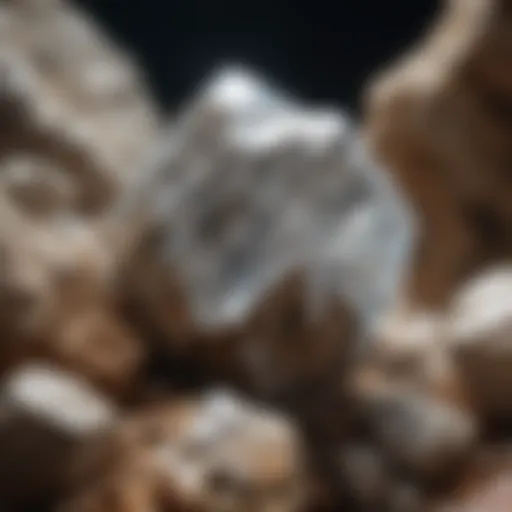
Talc is a naturally occurring mineral composed primarily of magnesium silicate, with the chemical formula Mg3Si4O10(OH)2. This makes it the softest known mineral on the Mohs scale, rated at just 1, which allows it to be easily scratched by other materials. In essence, talc is made up of different elements such as magnesium, silica, and oxygen, contributing to its unique properties. Additionally, talc often contains impurities like iron, which may influence its color and texture, and can range from white to various shades of green, gray, and even brown.
Talc’s composition also allows it to absorb moisture and oils, thereby enhancing its functionality in various applications. Its layered structure lends itself to remarkable separation under pressure, making it suitable for industrial applications that require fine particles. Overall, the definition and composition of talc shed light on its multifaceted uses and properties, making it a crucial subject for rock and fossil collectors to study.
Geological Formation
Talc is typically formed in metamorphic environments, resulting from the alteration of magnesium-rich minerals such as olivine, pyroxene, and amphibole through a process known as metamorphism. In simpler terms, when rocks containing these minerals are subjected to heat and pressure, talc emerges as a new phase. This geological transformation usually occurs in regions where there is significant tectonic movement, often leading to the formation of large talc deposits.
Different geological processes can lead to variations in talc formation. For instance, some deposits are created through hydrothermal processes where hot, mineral-rich water permeates existing rock structures, altering them over time. Other formations can be traced to the weathering of ultramafic rocks, such as peridotite and serpentinite, contributing to the mineral's presence in certain areas.
Talc can also be found in significant quantities in places like the United States, China, India, and Brazil. These geographical elements sway not only its availability but also the economic implications tied to its mining and extraction. The understanding of talc's geological formation reveals not only where to find this intriguing mineral but also informs collectors of the historical contexts in which these deposits were formed.
Understanding these geological processes unveils the depth of talc's existence and the importance of preserving such natural wonders.
In summary, grasping the definition and geological formation of talc lays the groundwork for appreciating its various utilities in modern life while enabling us to confront the complexities tied to its health implications and environmental ramifications. This foundational knowledge sets the stage for further exploration into the physical, chemical, and industrial dimensions of talc.
Physical Characteristics of Talc
The physical characteristics of talc play a pivotal role in both its identification and application across numerous fields. As a mineral, its qualities not only determine its usage but also contribute to its allure for collectors and industries alike. Understanding these characteristics—be it talc's distinctive softness, its unique luster, or the array of colors it can exhibit—adds depth to the conversation surrounding this fascinating mineral.
Texture and Hardness
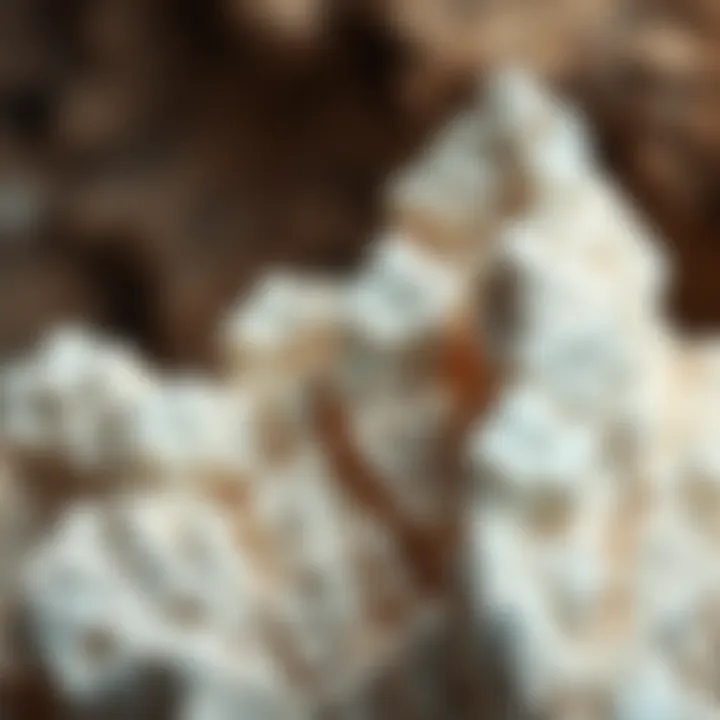
Talc is renowned for being the softest mineral on the Mohs scale, standing at a mere one in hardness. This exceptional softness isn’t merely a trivia point; it’s a critical factor that defines its employment in various domains. For instance, talc's workable consistency makes it a sought-after component in the production of talcum powder, providing that silky feel that many products aspire to achieve.
Interestingly, its texture can vary depending on its purity and the presence of other minerals. Pure talc exhibits a soapy feel, which is why many collectors find it endearing. When a collector types their fingers across a talc specimen, they may notice the smooth surface contrasting with more abrasive minerals, creating a tactile conversation.
Moreover, this softness leads to some essential considerations. While it is easy to carve and shape, this same property can render talc more susceptible to scratches and wear. Thus, understanding this aspect becomes crucial for collectors and users alike when considering its application in different settings. Take care, for if one were to toss a talc specimen casually into a collection, it might just accrue a few battle scars from its neighboring warriors.
Luster and Color Variations
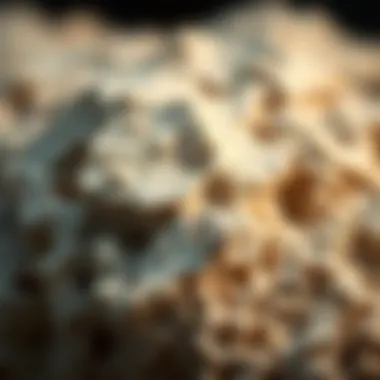

Another captivating element of talc is its luster, which can vary from pearly to greasy, depending on the form it takes. This is not just a matter of aesthetics; it influences how talc interacts with light, adding to its beauty and desirability. A fine example is the talc found in soapstone, where the mineral displays a rich, waxy luster, making it highly sought after for artistic and culinary uses. Artists favor soapstone for carving, as its luster enhances the visual appeal of the finished pieces.
Color also plays a significant role in the perception and classification of talc. Talc can manifest in several hues—ranging from gray and green to white and even pink. Such variations often stem from the impurities present in the mineral. For instance, the green or blue varieties may contain chlorite or amphibole, respectively, which thrillingly punctuate a collector's display. Thus, when it comes to talc, every piece tells its own story, colored not just by pigments but by the geological history that molded it.
"The beauty of talc lies not only in its softness but also in its myriad colors and textures, revealing history and craftsmanship alike."
Chemical Properties of Talc
The chemical properties of talc are fundamental to understanding its unique characteristics and applications. Talc is composed primarily of magnesium silicate, which gives it a distinctive chemical structure that affects its behavior in various environments. Grasping these properties helps delineate why talc is favored in several industries, particularly in cosmetics and pharmaceuticals.
Chemical Structure
Talc’s molecular formula is commonly expressed as Mg3Si4O10(OH)2·O, indicating it is a hydrated magnesium silicate. This complex structure gives talc its notable properties. Each magnesium atom is surrounded by octahedrally coordinated oxygen and hydroxyl groups, while silicon atoms are tetrahedrally coordinated with oxygen. This arrangement contributes to talc’s layered structure, making it easily separable; it can be considered a flaky mineral.
The layers can slide over one another with minimal force, which explains its excellent lubricating properties. This property is not only useful in industrial applications but is also why talc is extensively used in cosmetic formulations. Talc's chemical structure ensures that it remains stable under various environmental conditions, enhancing its usability.
Reactivity and Stability
When discussing talc's reactivity, it's important to note that talc is generally considered inert in chemical reactions. It doesn’t easily react with most acids or bases, which contributes to its stability in various applications. This inertness makes it a good candidate for use in environments where reactivity might pose a challenge.
However, talc does have some susceptibility to high temperatures; at elevated temperatures, the hydroxyl groups within its structure can lead to decomposition. But in most day-to-day applications—whether in beauty products like baby powder or in manufacturing processes—talc performs exceptionally well without strong chemical reactions.
"The chemical stability of talc is essential for its safety and efficacy in consumer products, reassuring users of their reliability."
In summary, talc's unique chemical structure and stability render it an invaluable substance across diverse fields. As we continue to delve into its applications, we will see how these properties reconcile with consumer safety and regulatory requirements, shaping the future landscape of talc use.
Applications of Talc in Various Industries
Talc, often perceived merely as a soft, powdery mineral, plays a multifaceted role across a myriad of industries. Understanding its applications sheds light on both its utility and underlying significance in modern manufacturing and health-related products. With its unique physical and chemical properties, talc remains a vital component in everything from cosmetics to pharmaceuticals, contributing to product stability, texture, and overall efficacy. The importance of talc cannot be overstated, as it bears implications that reach well beyond the surface level of its uses. Let's explore how talc finds its place in various sectors, enriching both products and the lives of consumers.
Cosmetics and Personal Care Products
The beauty industry is perhaps one of the most vocal advocates for talc. Its fine, powdery texture delivers a silky feel and excellent spreadability in cosmetics. Talc is found in numerous products including face powders, eye shadows, and blushes. But its role doesn't end simply at providing a pleasing texture. Talc also acts as a bulking agent, allowing products to maintain a specific consistency while absorbing excess moisture. This ensures that end-users enjoy a smooth application.
Observations in consumer preferences indicate that many gravitate towards talc-containing cosmetics for their long shelf life. The mineral also offers benefits such as preventing caking. However, it is critical to highlight that, in recent years, the safety of talc in cosmetics has come under scrutiny due to concerns over potential contamination by asbestos, a known carcinogen.
"While talc is prized for its ability to enhance cosmetic products, manufacturers must prioritize sourcing and testing to ensure consumer safety."
Pharmaceuticals and Food Industry
Talc is not just a pretty face in the world of beauty; it also plays an essential role in the pharmaceutical sector. In the production of pharmaceuticals, talc is utilized as a flow agent in both tablet formulations and powdered forms. Due to its inert nature, it helps prevent clumping, ensuring uniform dosage and enhancing the manufacturing process. Furthermore, talc's moisture-absorbing properties are invaluable in preserving the quality of sensitive medications.
Within the food industry, talc appears as an anti-caking agent, aiding in maintaining the quality of powdered substances like spices and flours. This application guarantees that products remain free-flowing, avoiding the clumping that can degrade quality and lead to waste. Yet, just like with cosmetics, there remains a responsibility for rigorous testing to ascertain that the talc used in food products is free from harmful contaminants.
Industrial Applications
The industrial landscape benefits significantly from talc's versatile application characteristics. In the manufacturing of ceramics, talc enhances the mechanical properties of the final products, contributing to improved durability and reduced thermal expansion. When used in plastics, talc functions to enhance rigidity while also acting as a flame retardant. Its lightweight nature makes it an ideal filler in materials such as paints and coatings, where increased volume is desired without adding significant weight.
Additionally, talc has garnered attention in the rubber industry, where it is employed to improve processing and product performance. This mineral has unique properties that not only contribute to overall performance but also improve the longevity of rubber products. The comprehensive use of talc across different sectors affirms its importance and showcases its adaptability to meet varied industry demands.
In summary, talc's applications span a wide array of industries — from enhancing cosmetic products to ensuring quality in pharmaceuticals and bolstering industrial materials. Each use underscores the need for responsible sourcing and usage, reinforcing the idea that while talc may be a simple mineral at face value, its implications are profound and multi-dimensional.
Health Concerns Associated with Talc
Understanding the health concerns linked to talc is paramount, especially as its applications span various sectors. While talc serves beneficial roles in cosmetics and pharmaceuticals, the scrutiny over its safety raises essential questions. In this part of the article, we will examine specific elements that underscore the significance of these health considerations, alongside the implications they have on both consumers and manufacturers.
Potential Risks in Consumer Products
Talc's inclusion in consumer products particularly garners attention due to its association with health issues. Concerns mainly arise from talc's potential to contain trace amounts of asbestos, a known carcinogen. Products such as talcum powder have come under fire, emphasizing the importance of transparency in ingredient sourcing. In recent years, studies have indicated possible links between long-term talc exposure and certain health risks, including ovarian cancer and lung disease.
For consumers, this potential risk provokes critical decisions regarding product use. Individuals often weigh the benefits of talc in products, such as its moisture-absorbing properties, against the purported dangers. This dilemma emphasizes the need for further research to clarify the safety of talc use in daily products.
Key considerations include:
- Source of talc: Manufacturers must ensure their talc is asbestos-free to mitigate risks.
- Product composition: Consumers should read product labels carefully, opting for brands that provide transparency regarding their testing and sourcing.
- Public awareness: Education regarding the safe use of talc is vital. Attending to fears rooted in misinformation can help enhance informed choices.
Environmental Impact of Talc Mining
The extraction of talc is not merely a mining venture; it engages with complex interactions within ecosystems and the surrounding communities. Talc mining can lead to substantial alterations in the landscape, affecting not only the immediate environment but also the health of local flora and fauna. Understanding the environmental ramifications is vital for fostering a sustainable approach to its extraction and use.
Sustainability Considerations
When examining the sustainability of talc mining, the focus shifts to the long-term viability of practices involved. One major aspect is the responsible management of resources. This involves employing techniques that minimize disruption to the land and water systems. Moreover, the balance between economic gains and environmental protection is precarious. It is essential to prioritize methods that reduce the carbon footprint associated with talc mining.
Additionally, the application of regulations is paramount. Mining companies may engage in sustainable practices such as recycling water in their operations, effectively reducing waste. For example:
- Employing closed-loop water systems.
- Utilizing renewable energy sources to power operations.
- Incorporating new technologies that enhance mineral extraction efficiency without extensive land disruption.
Such measures not only minimize ecological damage but also ensure that communities benefit from increased job opportunities in a greener economy.
Land Rehabilitation Efforts
The aftermath of talc mining often leaves scars on the land, but there is hope in rehabilitation efforts aimed at restoring ecosystems. Land rehabilitation involves a series of actions that help recover areas affected by mining activity. The process is multi-faceted, requiring coordination between mining companies and environmental agencies.
Techniques for rehabilitation can include:
- Replanting indigenous vegetation that can stabilize soil and provide habitat for wildlife.
- Creating ponds and wetlands to improve biodiversity.
- Implementing erosion control measures to prevent soil degradation.
Land rehabilitation efforts are not only crucial for restoring natural habitats but serve to mitigate the legacy of mining activities. Restoration can enhance local biodiversity and, over time, re-establish the ecological balance disrupted by mining operations. This way, communities can witness the environment healing and thriving once again.
In the grand scheme of environmental stewardship, the way we approach mining today will echo in our ecosystems for generations to come.
In sum, while talc mining holds economic promise, it is clear that sustainability and restoration must guide every decision made in this industry. Future practices will determine whether the mining sector can align its activities with environmental health, paving the way for a more responsible interaction with this valuable mineral.
Talc in Historical Context
Talc is not just a mineral; it has sculpted civilizations, informed artistic endeavors, and influenced industrial processes throughout history. Understanding the historical context of talc offers a glimpse into how this soft mineral has shaped human experience. As we explore the significance of talc through different periods and cultures, we uncover profound nuances in human interaction with this natural resource.
Cultural Significance Across Civilizations
From ancient times, talc has found its place in various cultures due to its unique properties. In ancient Egypt, for instance, the powdery form of talc was utilized in cosmetics, allowing for the creation of eyeshadows and face powders. This practice wasn’t merely about aesthetics; it had cultural roots, enhancing one’s social standing and serving as a status symbol. The Egyptians recognized the mineral's value and incorporated it into their practices, interlinking beauty with spiritual significance.
Similarly, in the regions of South Asia, talc has held cultural connotations in art and ritual. The fine, buttery texture made talc an ideal medium for sculpting, particularly in crafting intricate carvings. In this case, the stone has pivoted from mere practicality to being an emblem of cultural identity, representing artistic heritage passed down through generations.
The adaptability of talc extends beyond cosmetic uses. In medieval times, it was employed in the production of specific inks due to its smoothness, allowing for vivid colors on parchment. The blend of talc with other minerals in ink formulation paved the way for significant advancements in literature and documentation, highlighting how a single mineral can propel societal evolution.
Evolution of Uses Over Time
As centuries rolled on, the roles of talc morphed significantly, reflecting the changes in societal needs and technological advancement. The Industrial Revolution marked a pivotal turning point. Talc's properties made it a sought-after mineral for a multitude of applications, from paper manufacture to rubber production. It was during this period that talc evolved from an artistic base and cosmetic powder to an essential industrial commodity.
By the 20th century, talc saw diversified applications. Its inclusion in formulations for personal care products became more pronounced, as companies recognized its ability to absorb moisture and reduce friction. Today, talc is apparent in powders, deodorants, and a myriad of other daily consumables. This evolution underscores an important point: the uses of talc have continuously adapted, speaking volumes about innovation and the constant quest for efficiency in product formulation.
As we push forward into the 21st century, ongoing research keeps bringing talc back into focus. Scholars and scientists are currently investing time into sustainable extraction techniques and exploring new, safe avenues of application, while keeping an eye on environmental repercussions that may arise from its use.
"Talc’s fascinating journey through time mirrors humanity's own evolution—both reflecting changing needs and pushing boundaries."
In summary, talc has woven its way through human history, transitioning from sacred use in ancient rituals to ubiquitous presence in modern-day products. Its adaptability and appeal showcase not only its intrinsic properties but also the ever-changing landscapes of culture and technology. Understanding this historical context enables a richer appreciation of talc's multifaceted role in shaping civilizations.
Future Perspectives on Talc
As we look ahead, the future of talc holds intriguing possibilities. This section dives into important trends and market dynamics surrounding this versatile mineral. Understanding these aspects is crucial for rock and fossil collectors and industrial stakeholders alike, as they navigate through innovations and shifts in demand associated with talc. The evolving market could lead to new applications and methods that enhance its utility while keeping environmental concerns in check.
Trends in Research and Innovations
Research on talc is buzzing with excitement as scientists and engineers explore novel applications and improvements to existing uses. Innovations in material science are prompting exploration of talc's role in structural materials, cosmetics, and even advanced technologies. For instance, research indicates that talc can improve the thermal and mechanical properties of certain composites, making it essential in the automotive and aerospace industries.
Moreover, new extraction and processing techniques aim to enhance the purity and usability of talc. This may involve more efficient mining practices or new ways to separate talc from impurities. Such advancements not only promise higher-quality talc but can also minimize the environmental footprint of mining operations.
"Emerging applications in nanotechnology and pharmacology position talc as a pivotal material in the next generation of products."
Additionally, the shift towards sustainability is prominent, with researchers investigating talc’s compatibility with biodegradable materials. Talc’s lightweight nature and property enhancements could lead to eco-friendly packaging solutions or sustainable construction materials, providing appealing alternatives in a world increasingly focused on green technologies.
Market Dynamics and Projections
The market for talc is subject to fluctuations driven by supply, demand, and regulatory factors. As industries evolve, so do the applications and preferences associated with talc. The cosmetics and personal care industries, for instance, are scrutinizing their ingredients more than ever due to health concerns. This has led to a push for talc alternatives, though talc remains a staple in many formulations for its smooth texture and absorbency.
Reports suggest that the global talc market is on an upward trajectory, with a surge in demand anticipated from the Asia-Pacific region. The growth in construction and automotive sectors in countries like China and India is a key driver. However, the market’s future isn't without challenges. Increased awareness about the health implications surrounding talc usage creates a demand for transparency, pushing manufacturers to prioritize safety in both mining and production processes.
In addition, stakeholders are examining trends towards regulatory changes that could impact sourcing. For instance, the increased scrutiny from agencies may create barriers for companies lacking robust safety protocols.